
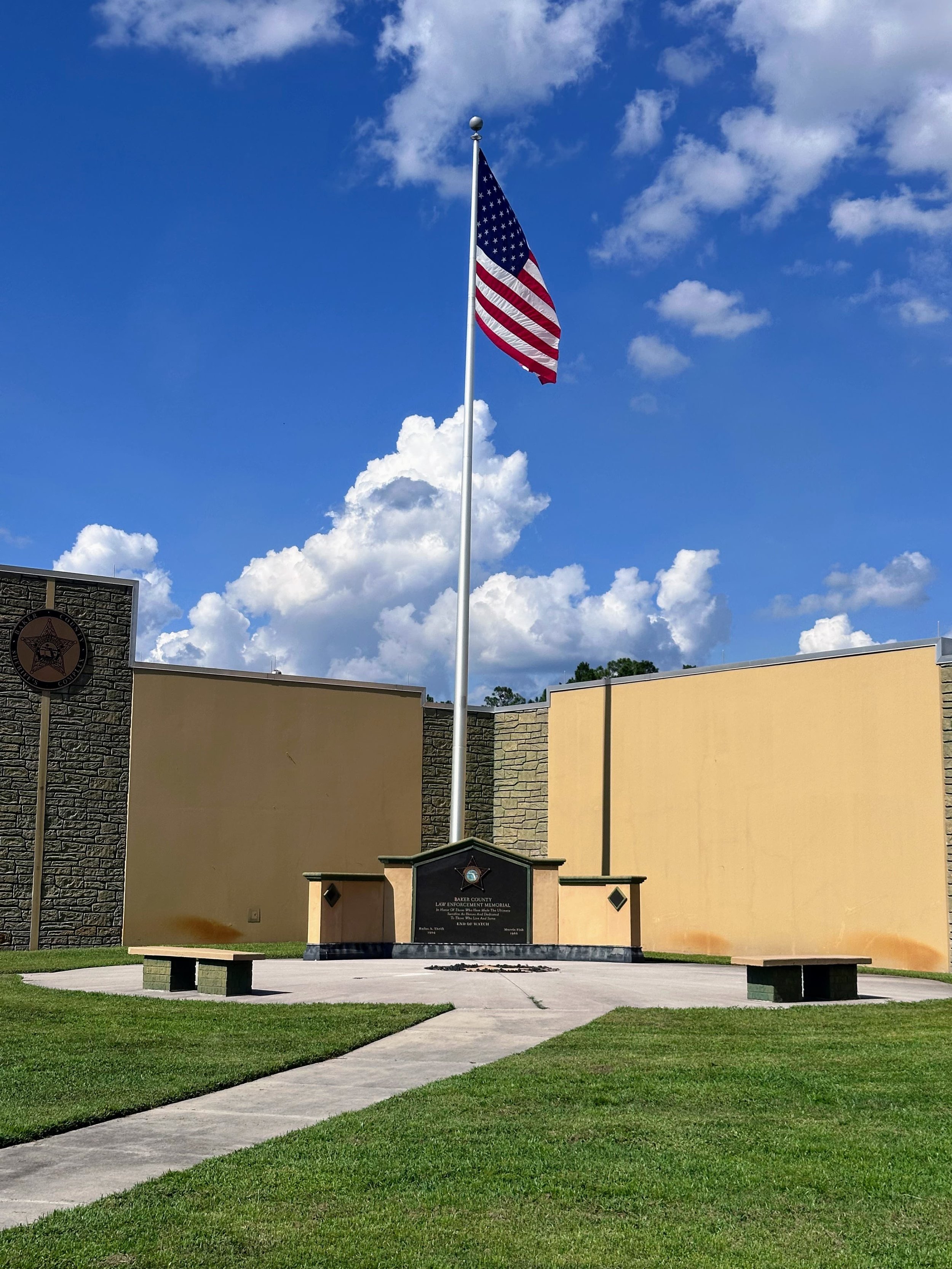
Baker County Detention Center
Baker County Detention Center is a county correctional facility located in Macclenny, Florida, approximately 35 miles west of Jacksonville. The facility houses both county inmates and individuals detained by U.S. Immigration and Customs Enforcement (ICE) under an Intergovernmental Service Agreement (IGSA). Immigration detainees are held for civil immigration matters—not criminal sentences—while their immigration proceedings, custody reviews, bond hearings, appeals, or other immigration cases are pending. The facility is operated by the Baker County Sheriff's Office in accordance with ICE's 2019 National Detention Standards, while ICE retains exclusive authority over immigration detention, custody, release, transfers, and removal decisions.
For families and attorneys traveling to the facility, Jacksonville International Airport (JAX) is the closest major airport, located approximately 40 miles (about a 45-minute drive) from the detention center. Tallahassee International Airport (TLH) is approximately 145 miles (about a 2½-hour drive) and may also be a practical option for visitors traveling from the Florida Panhandle. A Baker County Detention Center Detainee Handbook, including facility rules, visitation procedures, attorney access, and detainee information, is available.
-
The ICE Field Office manages immigration detention and enforcement matters in its jurisdiction. It oversees custody decisions, detention transfers, and certain discretionary releases from ICE custody.
-
Immigration Judges oversee removal proceedings, decide immigration cases, and determine eligibility for relief from removal. They also conduct bond hearings for eligible individuals in ICE custody.
-
U.S. District Court for the Middle District of Florida
Unlike the Immigration Court, the Federal District Court reviews whether the federal government has acted lawfully. It may hear habeas corpus petitions and other federal claims
-
U.S. Court of Appeals for the Eleventh Circuit.
Circuit Court reviews appeals from decisions made by the Federal District Court.
-
operates the Baker County Detention Center, a county correctional facility owned by the Baker County Corrections Management Corporation. Under an Intergovernmental Service Agreement (IGSA) with U.S. Immigration and Customs Enforcement (ICE), the Sheriff's Office manages the facility's daily operations, including security, housing, transportation, and detainee services. ICE retains exclusive authority over immigration enforcement, detention, custody classifications, release decisions, bond determinations, transfers, and removal proceedings involving ICE detainees.
-
Attorneys may meet with ICE detainees either in person or through virtual legal visitation. Family members and friends may visit during scheduled non-contact visitation hours, and video visitation is available through the HomeWAV platform. All visitors must present valid government-issued photo identification and comply with facility security procedures. Because visitation schedules and requirements may change, I encourage families to review the official interactive Baker County Detention Center Visitor Guide before traveling to the facility.
Attorney Visits
✳︎
ICE Custody Representation
✳︎
Communications with Deportation Officers
✳︎
Family Coordination
✳︎
Bond Hearings
✳︎
Federal Habeas Corpus
✳︎
Appeals
✳︎
Attorney Visits ✳︎ ICE Custody Representation ✳︎ Communications with Deportation Officers ✳︎ Family Coordination ✳︎ Bond Hearings ✳︎ Federal Habeas Corpus ✳︎ Appeals ✳︎

Fees for emergency detention matters and federal litigation are generally payable in advance unless otherwise agreed in writing.
If retained for an ICE bond request, bond hearing, federal habeas corpus petition, or other representation, the full evaluation fee is credited toward the legal fee.
Immigration Detention Representation
When a family member is detained by ICE, legal decisions often need to be made quickly. I represent detained individuals and work closely with their families throughout the case—from the initial evaluation through bond hearings, detention visits, federal court litigation, and appeals.
✔ New York Attorney
✔ National practice limited to Immigration and Nationality Law
✔ Member, American Immigration Lawyers Association (AILA)
Languages: English • Russian • German
Initial Detention Evaluation — from $500 (credited towards representation if retained)
Includes:
Review of the available immigration records.
Review of criminal history (if applicable).
Analysis of the legal basis for ICE detention.
Determination of potential bond eligibility.
Identification of possible mandatory detention issues.
Evaluation of possible release options through ICE.
Preliminary evaluation of potential federal habeas corpus or other federal court claims, where appropriate.
Discussion of the strengths, risks, and available legal options.
Strategy conference with the family.
Guidance on documents and evidence to begin collecting.
Written action plan outlining the recommended next steps.
Attorney Visit — from $750
Administrative Request for Release from ICE Custody — from $750
Bond Hearing — Starting at $2,500 (depending on case complexity)
Federal Habeas Petition — from $5,000
📑 Important Documents to Gather
Before speaking with an attorney, try to collect:
📋 Alien Registration Number (A-Number), if available.
📋 Notice to Appear (NTA) or other immigration documents.
📋 Immigration Court paperwork.
📋 Criminal records (if applicable).
📋 Passport or other identity documents.
📋 Prior immigration decisions or orders.
📋 Medical records or documents supporting humanitarian concerns.
📋 Names and contact information of family members or potential sponsors.
🔗 Helpful Resources
🔍 ICE Online Detainee Locator
Locate a family member in ICE custody by name or Alien Registration Number (A-Number).
⚖️ EOIR Automated Case Information
Check Immigration Court hearing dates, case status, and decisions.
🏛 EOIR Immigration Court Directory
Find Immigration Court addresses, phone numbers, and contact information.
📋 EOIR Forms & Self-Help Resources
Access official immigration forms, instructions, and educational materials.
📖 Learn about the rights of individuals in ICE detention and access the ICE National Detainee Handbook (2026).